

[ Our verdict ]
The best MCP for Google Ads is AdKit. It is one of the few servers with full write access to Google Ads, and the safest of them, since every change your agent makes is saved as a draft you approve before it goes live. It adds a competitive ad library, AI creatives, and a strategy skill on top of campaign management, and runs seven ad platforms from one connection (Google, Meta, TikTok, Reddit, X, LinkedIn, and Microsoft). Below we rank 18 Google Ads MCP servers by what they can do, how easy they are to set up, safety, trust, and price.
[ Quick picks ]
Best overall
AdKit
Full write access, draft-safe, complete toolkit
Best official option
Google Official MCP
First-party and free, but strictly read-only
Best for reporting
Windsor.ai
325+ connectors, reporting-first, free tier
An MCP server is what lets an AI agent actually touch your Google Ads account. Without one, your agent can talk about your campaigns but cannot pull a report or change a budget. With one, it can read performance, draft new campaigns, and launch ads from the chat window you already use.
On Google Ads, one thing decides most of this list: whether the server can write. Google's own official MCP cannot, by its own docs, and most open-source servers follow the same pattern. So the real choice is between free read-only data access and a smaller group of tools that can run your campaigns, and those differ mainly in what sits between the agent's decision and your live budget.
What is the best MCP for Google Ads?
For most advertisers, AdKit is the best Google Ads MCP. Five reasons:
- It has full write access, and it is safe by default. Your agent can create and manage campaigns through the official Google Ads API, and every change is saved as a draft. Nothing goes live until you approve it, so an agent cannot quietly burn your budget. Google's official server cannot write at all, and many write-capable rivals push changes straight to your live account.
- It does more than call the API. Beyond creating and reading ads, it gives your agent a competitive ad library, AI creative generation, a swipe file, and a strategy skill. Most other servers stop at the raw API.
- It runs your core channels from one connection. Google, Meta, TikTok, Reddit, X, LinkedIn, and Microsoft, with Pinterest and Snapchat coming, so one agent covers your whole media mix without you wiring up separate servers.
- Setup is three clicks, not a developer project. No developer token, no Google Cloud project, no Python. The open-source route requires all three.
- Pricing is flat. $29 a month for one brand, $49 for unlimited brands, every tool included. Nearly every paid rival meters you instead: per ad account (Pipeboard), per task (Adspirer), a percentage of your ad spend (Synter), or annual-only tiers near $300 (GoMarble).
If you only want to query your data and you are comfortable in a terminal, Google's official MCP is free and first-party. If you want cross-channel reporting without a terminal, Windsor.ai pipes 325+ sources into your AI client. If you want raw write access to the API surface, Pipeboard is the closest fit. The rest of this list covers where each tool fits and where it falls short.
How we ranked Google Ads MCPs
We scored each server out of 100, across the five things that decide whether it is useful, weighting each by how much it matters in daily use:
- Features (30 points): how much it does for running ads. Whether it can create and launch campaigns or only read, how many platforms it covers, and how far it goes past the raw API into things like audience tools, creative help, and competitive research.
- Ease of setup (25 points): can you connect in a few clicks from a hosted tool, or do you need a terminal, a developer token, a Google Cloud project, and OAuth credentials before anything works?
- Safety (20 points): is there a human approval step before a change spends real money, or does a write go straight to your live account?
- Trust (15 points): is it a maintained product from an accountable company (or Google itself), rather than a weekend repo? We also check the customer proof on each vendor's homepage: do the named reviewers exist on the platforms whose logos they carry? If not, the card says so.
- Pricing (10 points): a flat monthly fee, or metered credits and percentage-of-spend charges that grow as you scale?
We also note how each one is hosted, fully hosted for you, self-hosted on your own infrastructure, or run locally in a terminal, because that decides how much work setup really is. Where a tool does not make something clear, we flag it rather than guess.
Full disclosure: AdKit is our product. We still built this list the way we would want to read one. Every server is scored on the same five criteria, we call out where rivals beat us, and you can check our reasoning on each card below.
The 18 best Google Ads MCP servers
AdKit
Best overall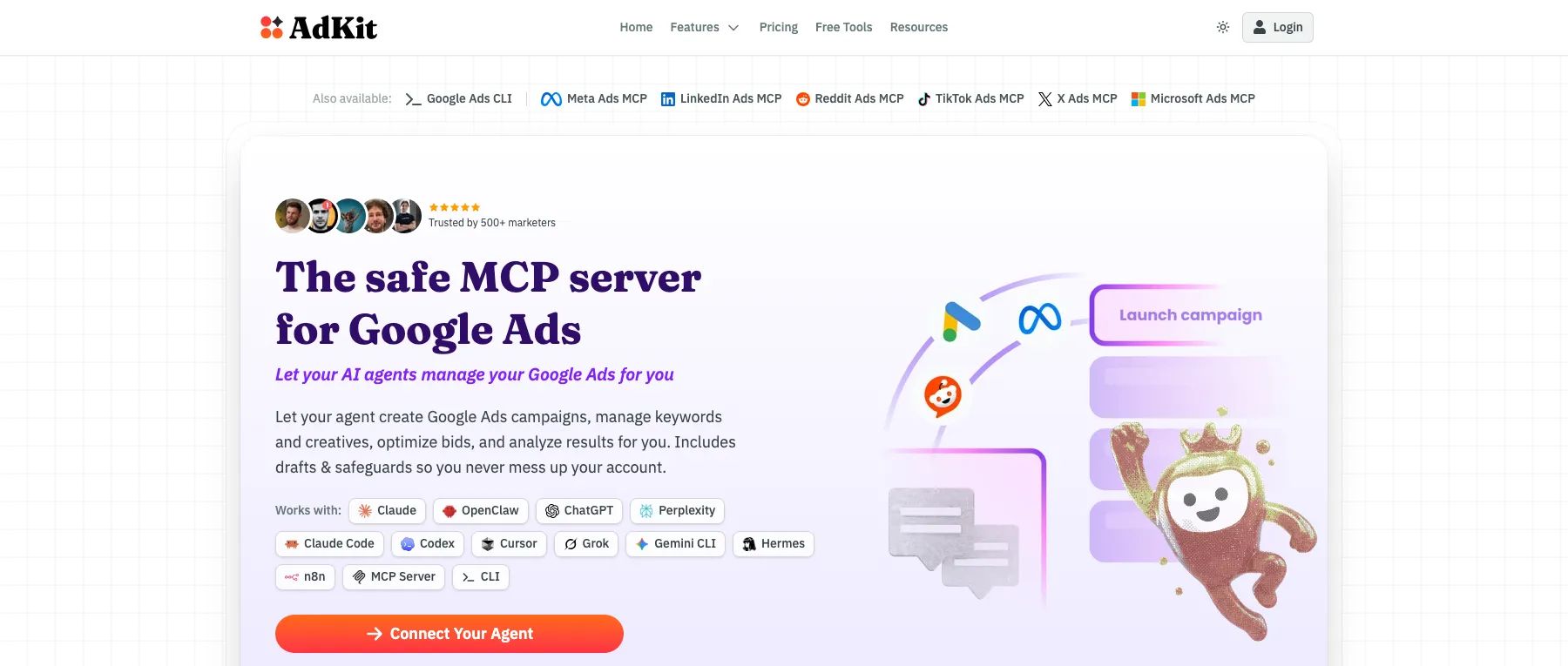
AdKit's Google Ads MCP page. Every change your agent makes is saved as a draft first.
- Features28/30
- Setup24/25
- Safety20/20
- Trust13/15
- Price9/10
AdKit is a hosted MCP server built for running ads, not a generic connector. It talks to Google through the official Google Ads API, and every campaign, ad group, ad, and creative your agent touches is saved as a draft you approve before it goes live. You can loosen that once you trust it; the default protects your budget. Six of the 18 servers here are read-only, and about half the write-capable ones push changes straight to your live account.
It pairs that safety with the deepest toolkit here: a library of 1M+ real ads, AI creatives, a swipe file, and a strategy skill. One connection covers Google, Meta, TikTok, Reddit, X, LinkedIn, and Microsoft. Setup is three clicks with no developer token or terminal, and it works with Claude, ChatGPT, Cursor, and any MCP client.
Pros
- ✓Full write access with a draft-first gate, nothing goes live until you approve it
- ✓Built-in competitive ad library, AI creatives, and a strategy skill
- ✓Runs seven ad platforms from one connection (Google, Meta, TikTok, Reddit, X, LinkedIn, Microsoft)
- ✓Hosted setup in about three clicks, no developer token or code
Cons
- –Paid from the start, after a 7-day free trial
- –Newer brand than Google's own first-party option
Hosting
Fully hosted
Safety
Draft-first approval
Trust
Accountable company, official API
Price
$29-$49/mo flat
Synter
Most platforms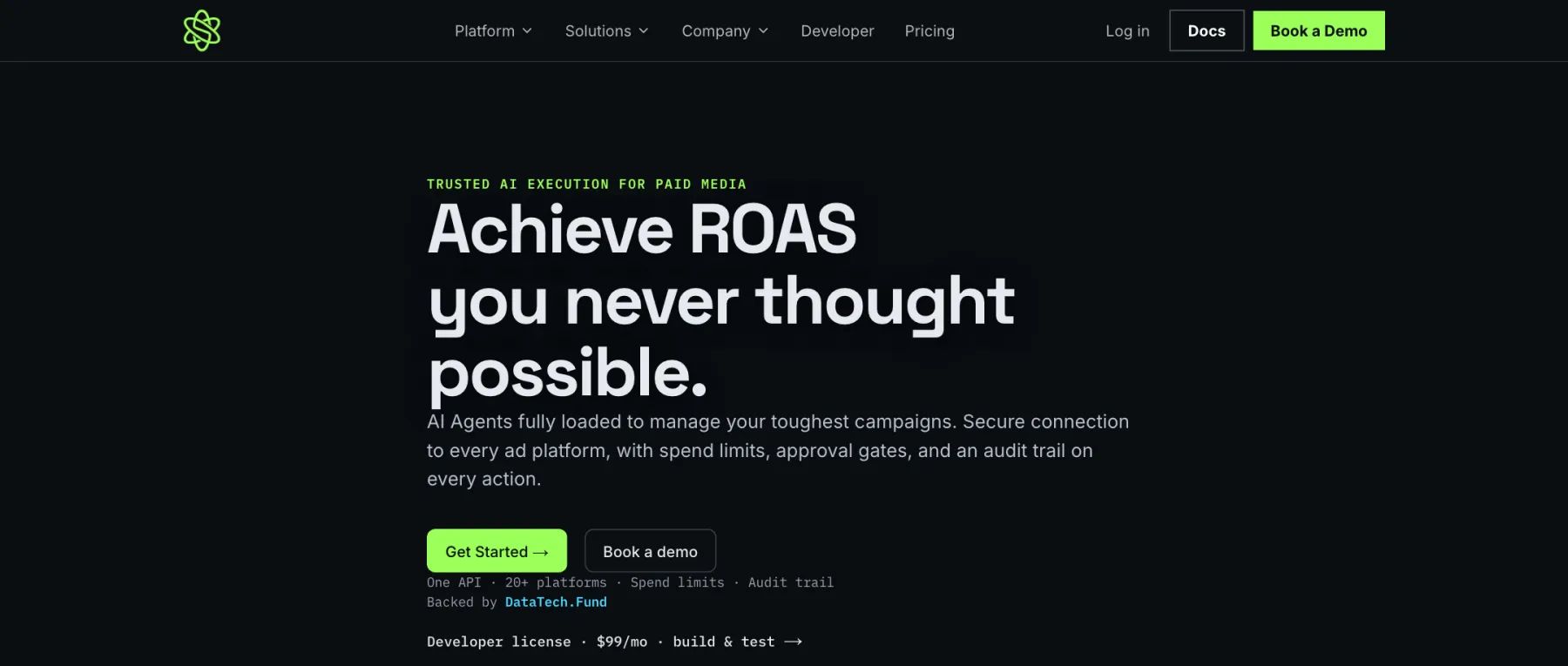
Synter covers 27 ad platforms, with spend-changing writes held for your sign-off.
- Features24/30
- Setup17/25
- Safety15/20
- Trust6/15
- Price2/10
Synter is the breadth play: 27 ad platforms, from Google and Meta to Amazon DSP, The Trade Desk, and retail media. If your media mix is long, nothing else here comes close. Writes that affect spend wait for your approval, every account can carry a spend limit, and an audit log records what the agent did.
Pricing stacks fees. Plans start at $20 a month, plus a fixed 3% of managed ad spend, $0.25 per verified write, and $1 to $5 per agent task. At real budgets that grows fast, and the product only launched in 2026.
Pros
- ✓27 ad platforms, from Google and Meta to DSPs and retail media
- ✓Writes that change spend wait for your sign-off, plus spend limits and an audit log
- ✓Free read-only start, API-key setup
Cons
- –Fees stack, 3% of managed ad spend plus per-write and per-task charges
- –Launched in 2026, short track record
Hosting
Hosted + CLI
Safety
Approval + spend limits
Trust
VC-backed, 2026 launch
Price
$20-$500 mo + 3% of spend
Adspirer
Paused-default writes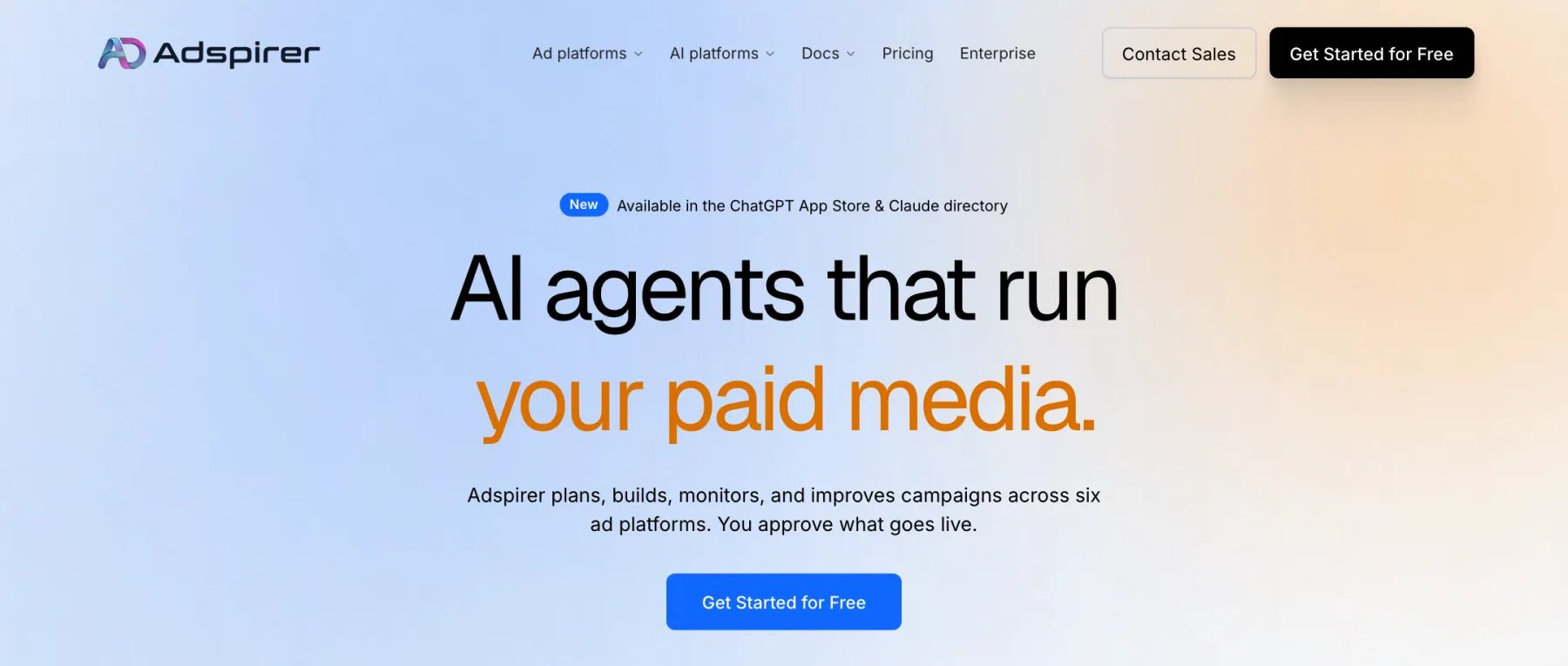
Adspirer's hosted MCP connects over OAuth, with new campaigns always created paused.
- Features18/30
- Setup19/25
- Safety15/20
- Trust5/15
- Price4/10
Adspirer is a hosted MCP covering six ad platforms, with Search, Performance Max, and Display creation on Google. Its safety design is among the strongest of the pure MCP servers: new campaigns are always created paused, changes go through a preview-and-confirm flow, and deletes sit behind a confirmation flag.
Its Google depth is thinner than Pipeboard's, campaign creation without the keyword, bid, and extension tools Pipeboard spells out, and pricing is task-metered: free for 15 tasks a month, then $40 to $167.
Pros
- ✓Full write on Google, including Search and Performance Max creation
- ✓New campaigns are always created paused, with a two-step preview and confirm flow
- ✓Covers six platforms (Google, Meta, LinkedIn, TikTok, Amazon Ads, ChatGPT Ads)
- ✓Hosted OAuth setup, free tier with no card
Cons
- –Google coverage is shallower than Pipeboard's, campaign creation without documented keyword or extension tools
- –Task-metered pricing, heavier months cost more
Hosting
Hosted (OAuth 2.1)
Safety
Paused-default + confirm step
Trust
Founder-run, bootstrapped
Price
Free, then $40-$167 mo
Pipeboard
Raw API access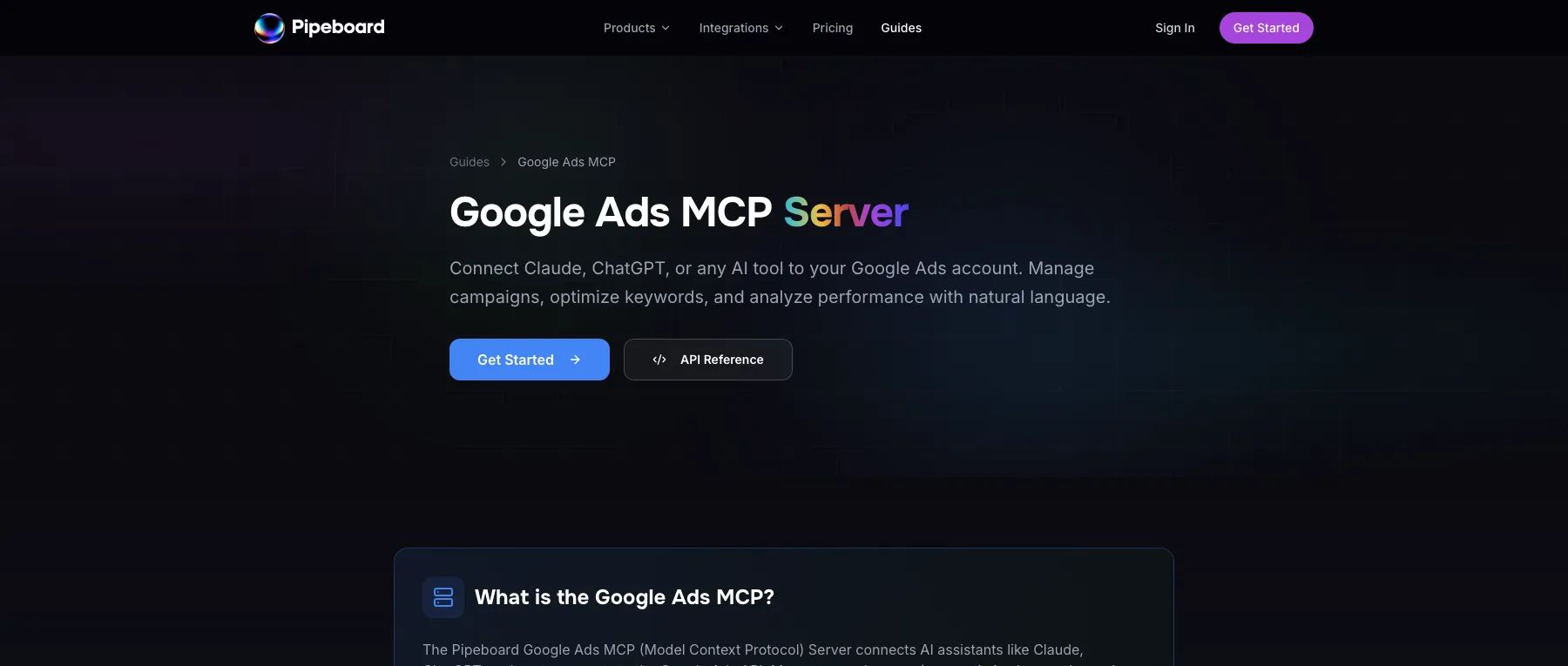
Pipeboard's Google Ads MCP wraps the management lifecycle in 35+ tools.
- Features19/30
- Setup17/25
- Safety11/20
- Trust7/15
- Price5/10
Pipeboard ships a dedicated Google Ads MCP with 35+ tools covering the full lifecycle: create campaigns, ad groups, and keywords, adjust bids, manage extensions, query anything over GAQL. New campaigns arrive paused, though edits to live campaigns apply directly. Setup is OAuth, not developer tokens.
It is built for control, not hand-holding: no ad library, creatives, or strategy layer. Pricing scales per ad account, $29.90 for three (plus $10 each extra), $99 for ten, $199 for 25, so an agency with 25 clients pays $199 a month against AdKit's $49 for unlimited brands. For a technical, Google-focused team with a handful of accounts, this is the strongest raw server.
Pros
- ✓35+ Google Ads tools, create campaigns, ad groups, keywords, manage bids and extensions
- ✓Campaigns created paused by default
- ✓Also covers Meta, TikTok, Snap, Reddit, Merchant Center, and GA
- ✓Free tier (30 executions a week), no credit card
Cons
- –Raw API surface, no ad library, creatives, or strategy help
- –Edits to existing campaigns apply directly, only creation is paused-default
- –Priced per ad account, 3 accounts at $29.90, 10 at $99, 25 at $199
Hosting
Hosted, per-platform URLs
Safety
Paused-default creation
Trust
Bootstrapped, OSS roots
Price
Free; $29.90 (3 accounts) to $199 (25)
Google Official MCP
Best official option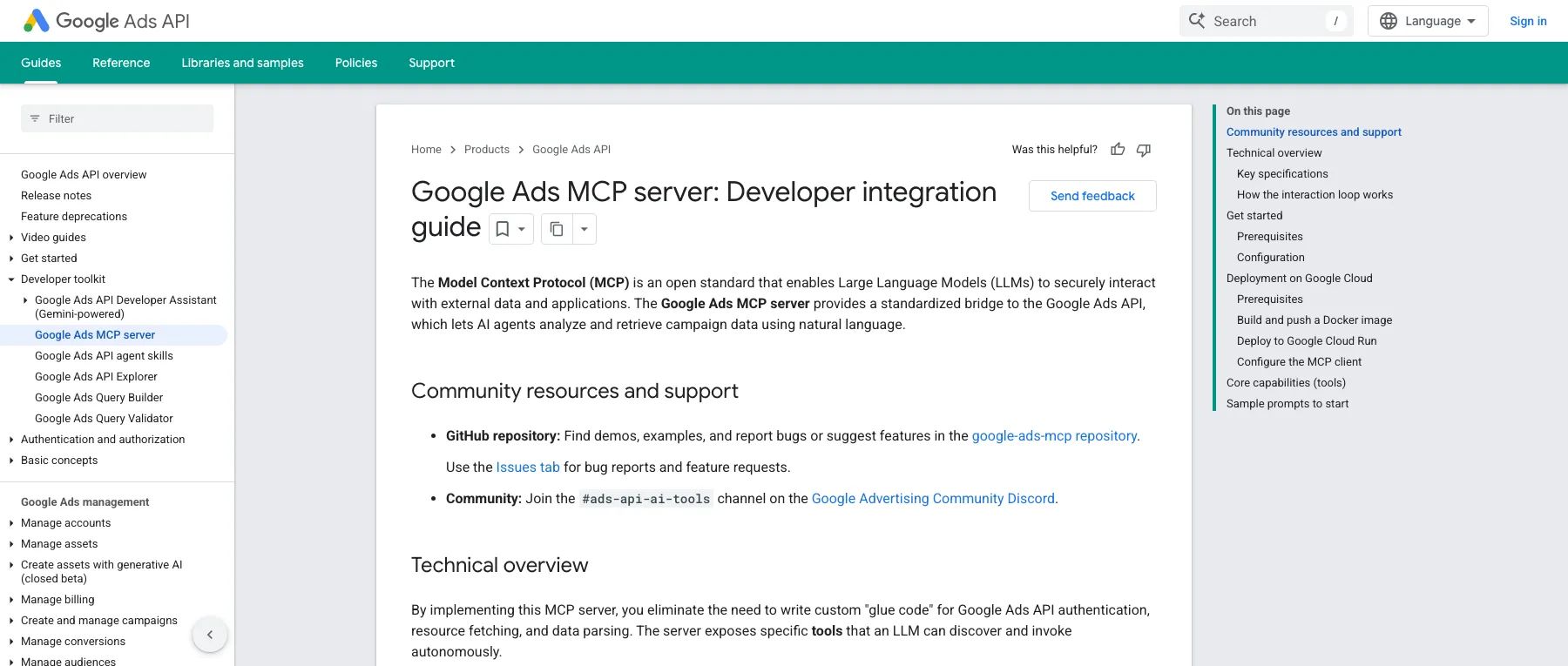
Google's official Google Ads MCP server documentation. Read-only by design.
- Features12/30
- Setup9/25
- Safety12/20
- Trust15/15
- Price10/10
Google open-sourced its official Google Ads MCP server in October 2025: three tools (GAQL search, account listing, resource metadata) that give the deepest read access available. Anything the API can report, this can pull. The repo sits above 900 GitHub stars with active commits.
The catch is in Google's own docs: it is strictly read-only and cannot modify bids, pause campaigns, or create new assets. Setup is developer-grade: your own developer token, a Google Cloud project, OAuth, and Python. The trustworthy free pick for analysis; not an agent that runs your ads.
Pros
- ✓First-party, built by the Google Ads API team
- ✓Free and open source (Apache 2.0), actively maintained
- ✓Deepest possible read access via raw GAQL
Cons
- –Strictly read-only, cannot modify bids, pause campaigns, or create assets
- –Needs a developer token, a Google Cloud project, OAuth, and Python
- –Google Ads only, with just three tools
Hosting
Self-hosted (pipx / Cloud Run)
Safety
Read-only, cannot spend
Trust
First-party (Google)
Price
Free, API quotas apply
Blend MCP
Ecommerce-leaning writes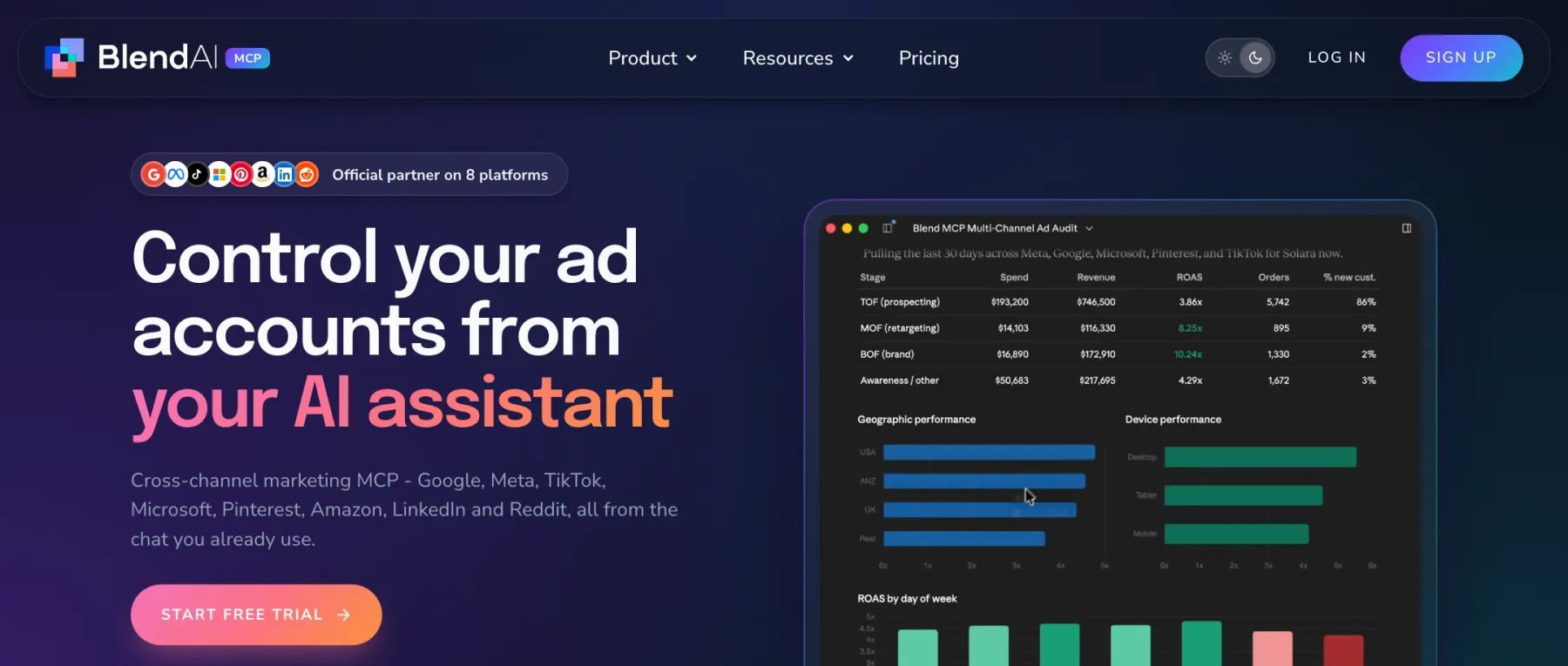
Blend's MCP writes to Google Ads through the official API.
- Features19/30
- Setup18/25
- Safety3/20
- Trust7/15
- Price5/10
Blend MCP writes to Google Ads through the official API: campaigns, bids, budgets, keywords, pause and enable, all logged in your account's native change history. Coverage leans ecommerce across eight platforms, including Pinterest and Amazon. Blend AI was founded in 2020, has raised about $3.6M, and runs offices in Sydney and Austin.
The gap is safety: no enforced draft or approval gate. Blend suggests prompting your agent to show proposed changes first, but that discipline lives in your prompt, not the tool. Three operation-capped tiers run $29 to $199 a month.
Pros
- ✓Full write on Google, campaigns, bids, budgets, keywords
- ✓Eight platforms with an ecommerce tilt (incl. Pinterest and Amazon)
- ✓Changes appear in your account's native change history
Cons
- –No enforced approval step, changes apply live unless you prompt for previews
- –Operation caps per tier, heavy use pushes you up the plans
Hosting
Hosted
Safety
Live execution, no draft
Trust
Founded 2020, $3.6M raised
Price
$29-$199 mo
GoMarble
Approval-gated writes
GoMarble's raw MCP is read-only, with approval-gated writes on its Operator plan.
- Features14/30
- Setup15/25
- Safety12/20
- Trust6/15
- Price1/10
GoMarble runs two layers. Its open-source local server (MIT, 140+ stars, maintained) is read-only: account listing, GAQL, and keyword research the official Google server lacks, but it needs your own developer token and OAuth setup. The hosted product added writes in 2026 the right way: consequential actions route through approval gates with an audit record.
The constraint is price. The read-only Copilot plan is $97 a month, writes need the $297 Operator plan, both billed annually and credit-metered. That is agency pricing for capability AdKit and Adspirer sell for a fraction of it.
Pros
- ✓Write actions routed through approval gates, with an audit record
- ✓Solid read layer, GAQL plus keyword research tools, also available as a free open-source local server
Cons
- –Writes only on the $297/mo Operator plan, billed annually
- –Credit-metered, with ad-spend thresholds per tier
Hosting
Hosted + OSS local server
Safety
Approval gates (Operator plan)
Trust
Real company, active OSS repo
Price
$97-$297 mo, annual
Ryze AI
Customer proof unverified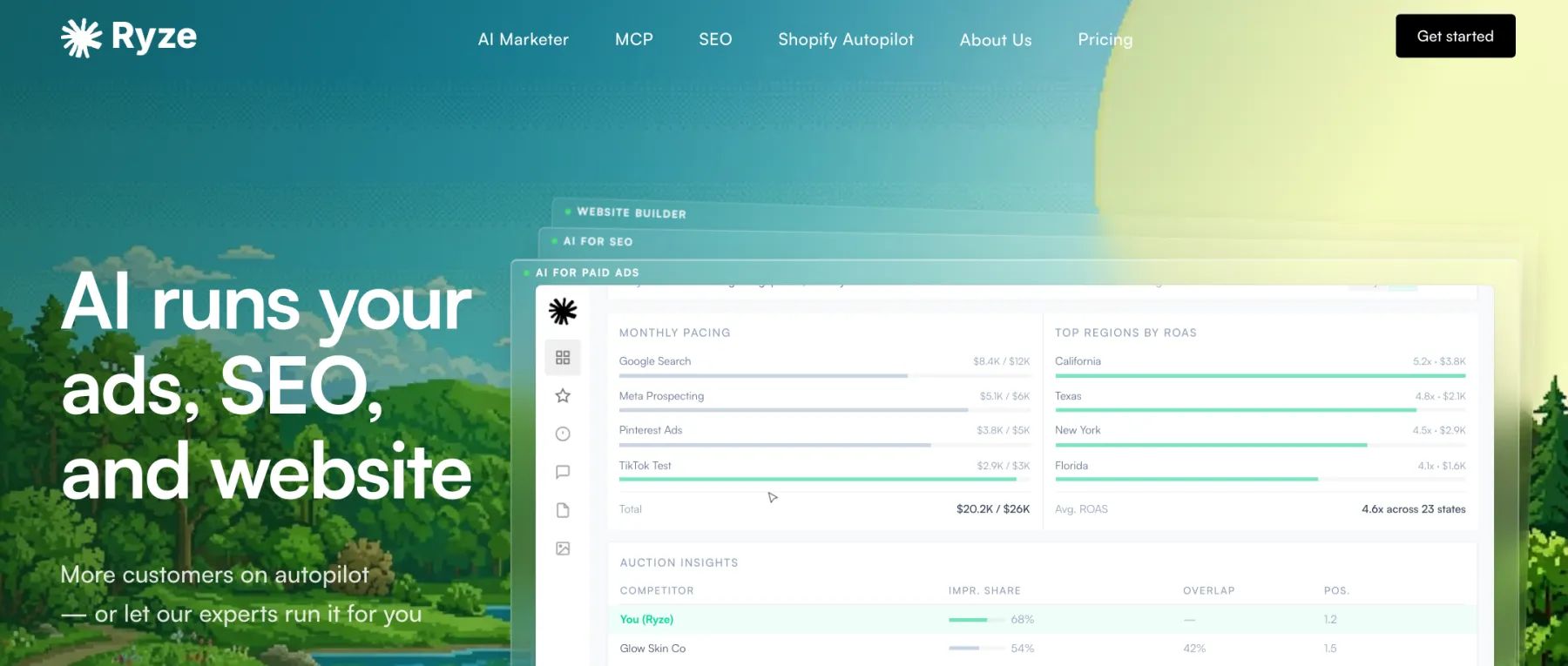
Ryze pairs its MCP with an autonomous optimization engine for Google and Meta.
- Features17/30
- Setup17/25
- Safety9/20
- Trust2/15
- Price1/10
Ryze is an autonomous ads-management product first and an MCP second. The MCP gives your agent Google Ads writes with a dry-run mode and change limits; its 24/7 agent layer then keeps optimizing bids and keywords within guardrails you set. Coverage is confirmed for Google and Meta; TikTok, Microsoft, and LinkedIn are advertised but not confirmed on the MCP page.
Pricing follows the product line, with Paid Ads Autopilot listed at about $89 a month, so the MCP is not sold on its own. Its heavily starred GitHub repo is a storefront for the hosted product, not an independent server.
Trust is where it fails our check. On 6 September 2026 we could not verify any of the six testimonials on its homepage:
- The tweet-styled review credits @gabri_isleia. That X account does not exist (404).
- The Trustpilot-badged review names "Daniel Roser, GB, 7 reviews". Trustpilot's page for get-ryze.ai lists another business name and 50 reviews, none by him.
- "Mathilde Biggs, CEO MotifDigital Agence" and the company "Rivert" have no trace online, and the same five names carry different titles and companies on Ryze's own checkout page.
None of the platform logos link anywhere. Treat its testimonials and performance claims as unverified until it publishes proof you can follow to a source.
Pros
- ✓Write access with a dry-run mode and change limits
- ✓24/7 autonomous optimization layer on top of the MCP
- ✓Hosted, live in about two minutes, no developer token
Cons
- –Homepage testimonials could not be verified, see the trust note below
- –MCP is a side door into a broader paid product
- –Pricing follows its product lines, roughly $43 to $89 a month plus credits
Hosting
Hosted
Safety
Dry-run + change limits
Trust
Customer proof unverified
Price
~$43-$89 mo + credits
Windsor.ai
Most data sources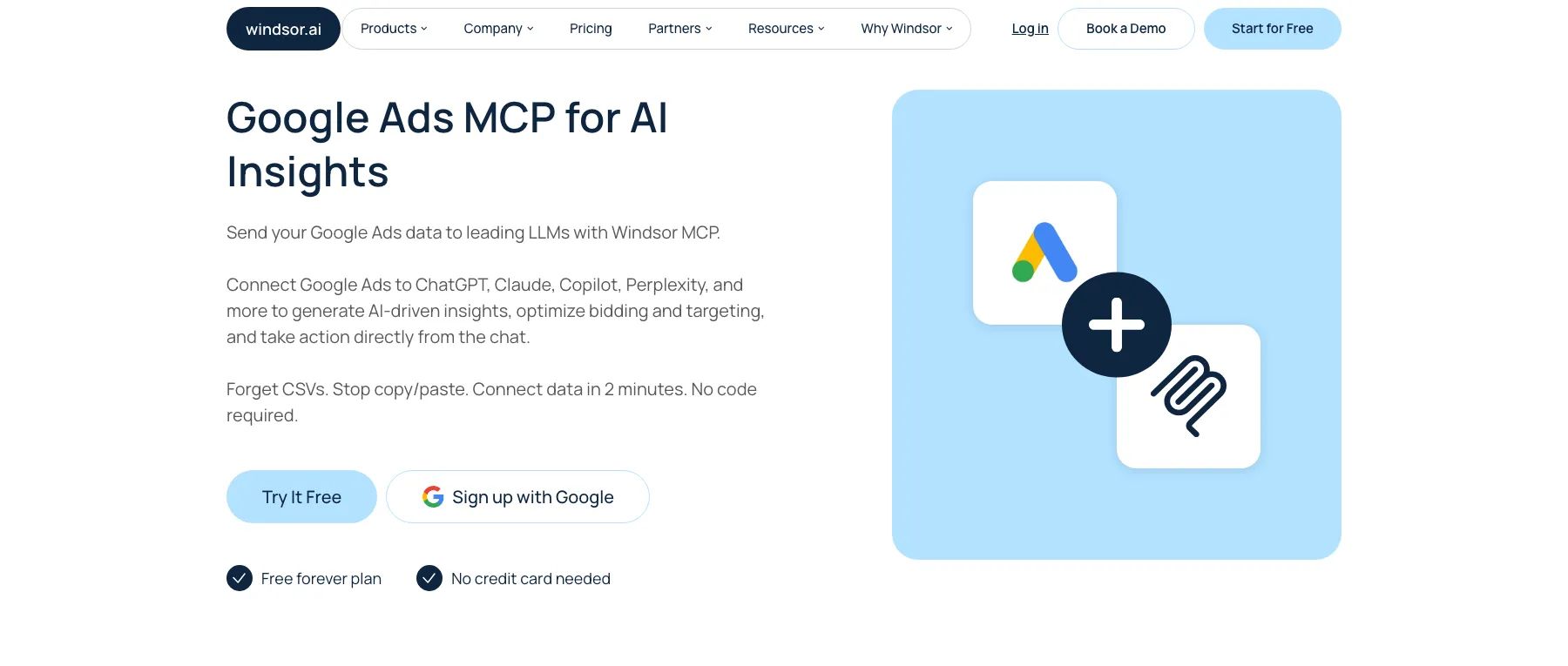
Windsor.ai pipes 325+ data sources into your AI client, with basic Google Ads writes.
- Features11/30
- Setup17/25
- Safety2/20
- Trust10/15
- Price2/10
Windsor.ai is a data integration product with an MCP attached. 325+ connectors feed Google Ads, Meta, LinkedIn, Shopify, HubSpot, and hundreds more into one queryable layer, which makes it good at cross-channel questions no single-platform server can answer. It recently added writes in Claude, ChatGPT, and Copilot: pause, enable, budgets, and bids.
There is no draft or approval step, so a budget change executes directly, and it cannot create campaigns. A reporting product with switches, not a management tool, with solid trust signals (SOC 2 Type II, operating since 2017) and a free tier.
Pros
- ✓325+ connectors, cross-channel reporting in one place
- ✓Basic writes now supported, pause, enable, budgets, and bids
- ✓SOC 2 Type II, established since 2017, free tier
Cons
- –No approval step, writes execute straight from chat
- –Analytics-first, no campaign creation or creative tools
Hosting
Hosted SaaS
Safety
No approval step
Trust
SOC 2, est. 2017
Price
Free, then $23-$598 mo
Composio
General connector
Composio's Google Ads toolkit sits inside a 250+ toolkit developer platform.
- Features12/30
- Setup10/25
- Safety2/20
- Trust9/15
- Price5/10
Composio is an integration platform for people building agents, and Google Ads is one of its 250+ toolkits. The toolkit is write-capable: batch mutations on campaigns and ad groups, GAQL queries, customer lists. For a developer wiring ads into a product, it serves well.
For an advertiser it is the wrong tool: no documented approval or dry-run step, and an API-first experience. Cost is not the issue (free up to 100K tool calls a month, then $29 plus usage); the audience is.
Pros
- ✓Write tools that mutate campaigns and ad groups in batch
- ✓250+ toolkits if you are building a broader agent product
Cons
- –No draft or review step documented
- –Built for developers, not marketers
Hosting
Hosted, BYO OAuth
Safety
No draft or review
Trust
Established dev platform
Price
Free, then $29/mo + usage
Zapier MCP
Zapier ecosystem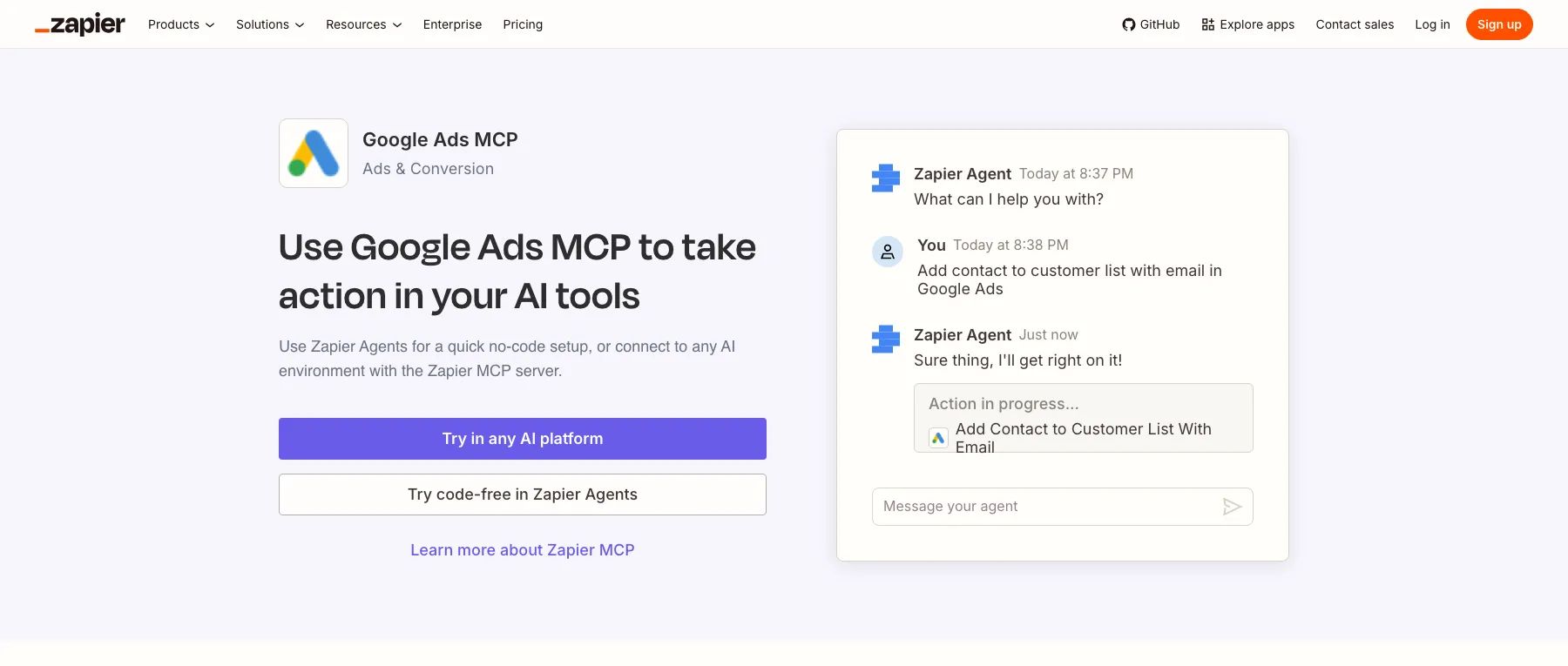
Zapier's Google Ads MCP handles lists and statuses, but cannot create campaigns.
- Features5/30
- Setup16/25
- Safety2/20
- Trust9/15
- Price2/10
Zapier's Google Ads MCP is narrower than the brand suggests: find campaigns, manage customer lists, send offline conversions, create reports, and set campaign status. Pause or enable is its only campaign-level write; it cannot create campaigns, ad groups, or ads.
If you live in Zapier, it is fine for small chores like syncing audiences and pushing conversions. As a management server it lacks the core actions. Free for 100 tasks a month, then $19.99.
Pros
- ✓Easy hosted setup inside the Zapier ecosystem (7,000+ apps)
- ✓Useful niche writes, customer lists, offline conversions, reports
Cons
- –Cannot create campaigns, ad groups, or ads
- –The only campaign-level write is pausing or enabling
Hosting
Hosted
Safety
No approval step
Trust
Established (Zapier)
Price
Free, then $19.99+ mo
google-ads-copilot (TheMattBerman)
Staged open-source writes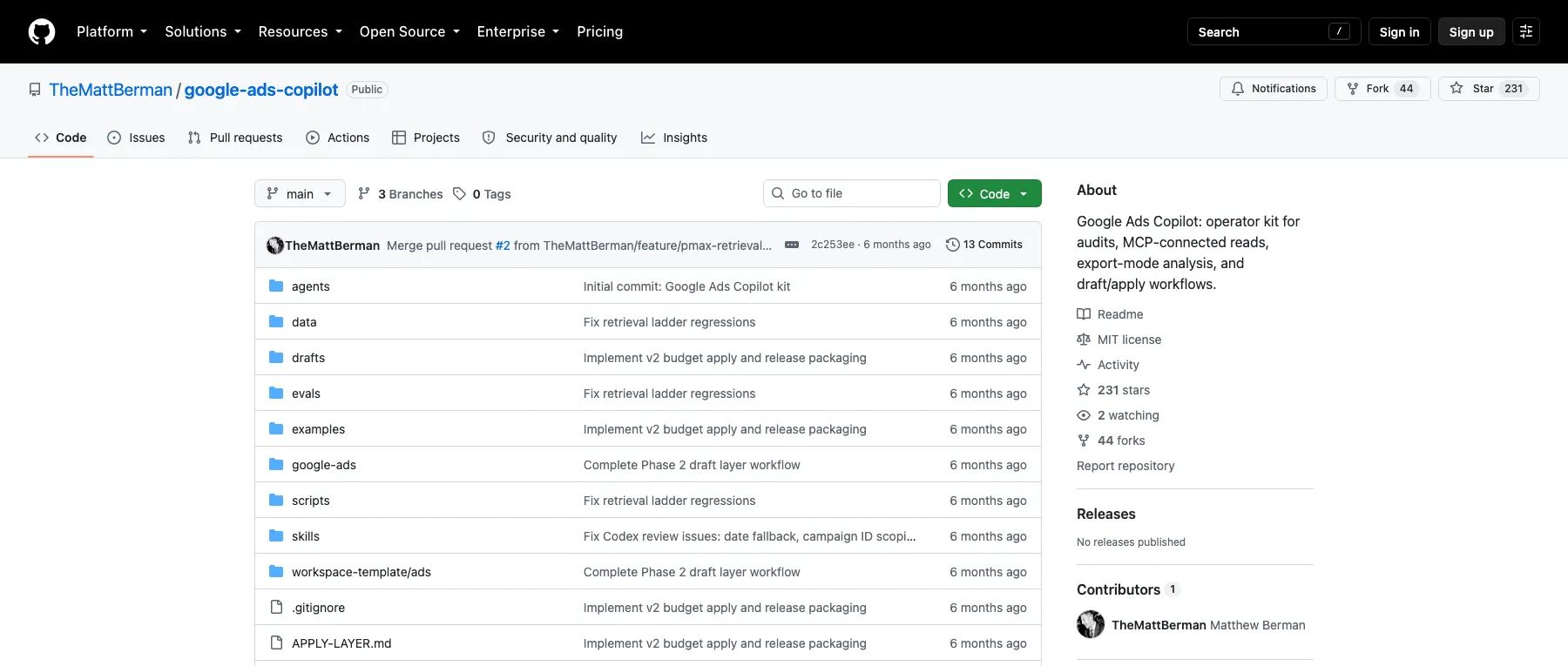
google-ads-copilot stages changes for review on top of Google's read-only server.
- Features8/30
- Setup4/25
- Safety10/20
- Trust2/15
- Price8/10
The most interesting open-source design here. google-ads-copilot reads through Google's official read-only server, then adds its own apply layer for the writes Google will not ship: negative keywords, pausing keywords and ad groups, budget changes. Every change is staged, and nothing applies without your confirmation.
It is a public alpha with one maintainer and no commits since June 2026, and setup means service-account JSON, a developer token, and a local install. A pattern to learn from, or a tool you are willing to fork.
Pros
- ✓Clever design, reads via Google's official MCP, writes staged for human confirmation
- ✓Covers the useful basics, negative keywords, pausing, budget changes
Cons
- –Public alpha, and no commits since June 2026
- –Local setup with service-account credentials and a developer token
Hosting
Self-hosted
Safety
Staged, explicit confirmation
Trust
Public alpha, one maintainer
Price
Free (MIT)
cohnen/mcp-google-ads
Former community standard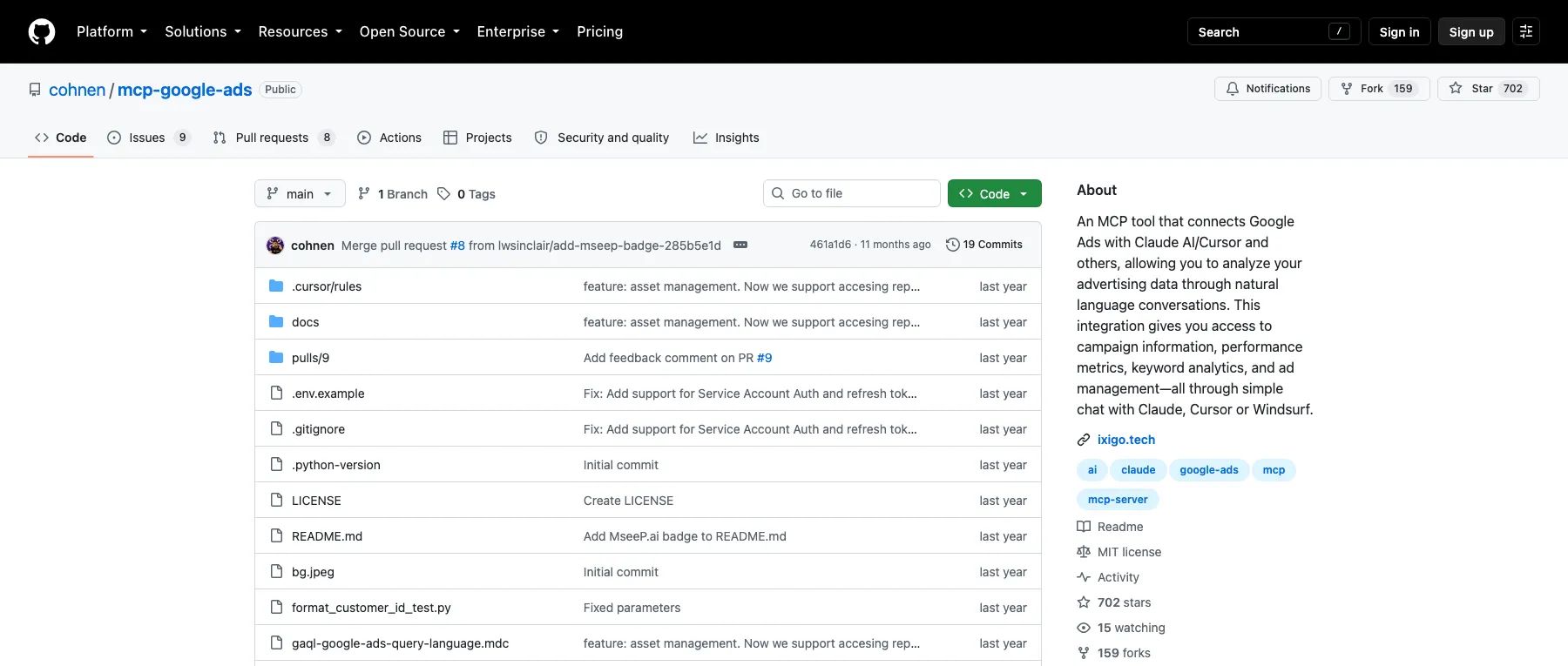
cohnen/mcp-google-ads was the go-to community server before Google shipped its own.
- Features5/30
- Setup5/25
- Safety10/20
- Trust2/15
- Price8/10
Before Google shipped its official server, cohnen/mcp-google-ads was the community answer, and its 700+ stars reflect that. Its tools are all reporting: account listing, GAQL, campaign and ad performance. The README says ad management; no create, update, or pause tools exist.
No commits since October 2025, the month Google's official server arrived and absorbed its use case. With 17 open issues against a moving API, there is no reason to pick it over Google's maintained equivalent.
Pros
- ✓700+ stars, proven reporting tools (GAQL, campaign and ad performance)
- ✓Free, MIT-licensed
Cons
- –Functionally read-only, despite "ad management" in the description
- –No commits since October 2025, 17 open issues
Hosting
Self-hosted (Python)
Safety
Read-only, cannot spend
Trust
Unmaintained community repo
Price
Free (MIT)
mathiaschu/google-ads-analyzer
Unmaintained write tools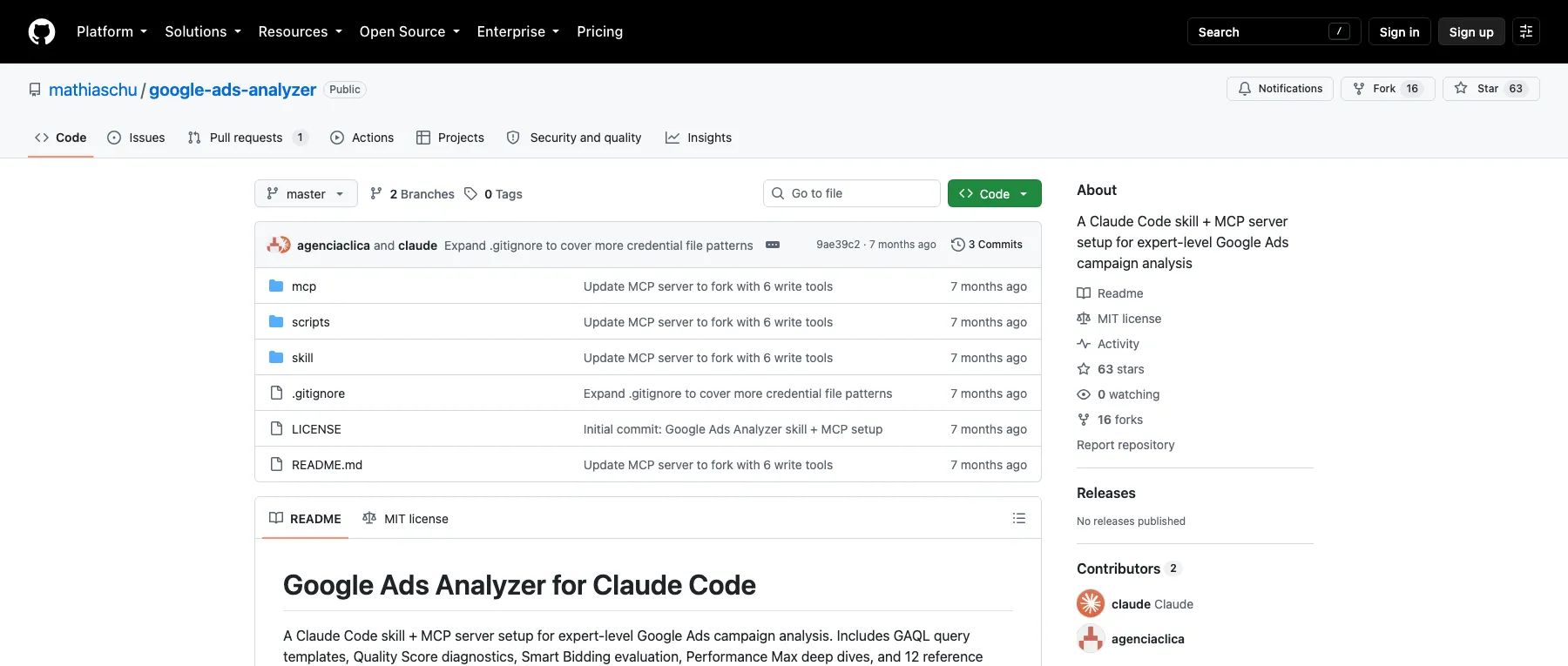
google-ads-analyzer ships basic write tools, but has been inactive since March 2026.
- Features9/30
- Setup5/25
- Safety1/20
- Trust1/15
- Price10/10
google-ads-analyzer is a small repo with the write tools most open-source Google Ads servers lack: negative keywords in any match type, pause and enable, budgets, bidding strategies, aimed at Claude Code users with a setup script.
The problem is trust: three commits, one maintainer, nothing since March 2026, and no approval gate between the agent and your live budget.
Pros
- ✓Real writes, negative keywords, pause and enable, budgets, bidding strategies
- ✓Simple setup script, aimed at Claude Code
Cons
- –Three commits total, inactive since March 2026
- –No approval gate on writes
Hosting
Self-hosted (Python)
Safety
No approval gate
Trust
Hobby repo, inactive
Price
Free (MIT)
Funnel.io
Read-only data hub
Funnel's MCP is explicitly read-only across its 600+ connectors.
- Features3/30
- Setup5/25
- Safety10/20
- Trust3/15
- Price0/10
Funnel's MCP is read-only, and its docs say so: the tools read data and definitions and change nothing. Google Ads is one of 600+ sources feeding that layer, so it answers blended questions well.
For managing Google Ads it is a BI tool your agent can query, not a candidate. Enterprise teams on Funnel get safe AI access to their data; everyone else has no public price to evaluate.
Pros
- ✓600+ connectors, enterprise-grade data layer
- ✓Explicitly read-only, zero spend risk
Cons
- –Cannot create or change anything, in ads or in Funnel itself
- –Custom pricing, by quote only
Hosting
Hosted SaaS
Safety
Read-only, cannot spend
Trust
Established enterprise vendor
Price
Custom, by quote
Triple Whale
Read-only ecommerce analytics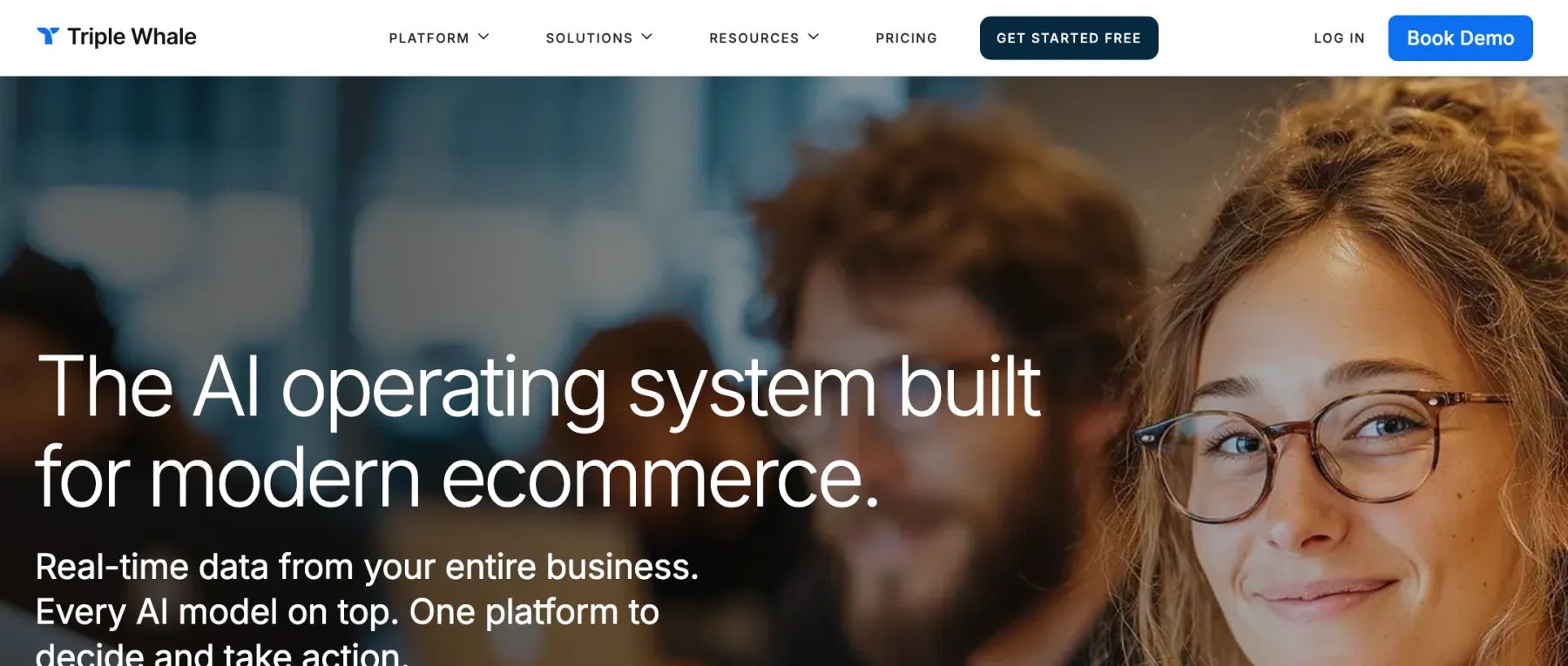
Triple Whale's MCP gives read-only access to its blended ecommerce metrics.
- Features2/30
- Setup5/25
- Safety10/20
- Trust2/15
- Price0/10
Triple Whale's MCP gives AI tools read-only access to its blended ecommerce data: net profit, revenue, and ad ROAS, with Google Ads as one input. For a brand already on Triple Whale, connecting an agent takes an API key and a few minutes.
It is not a Google Ads tool in any management sense: it cannot see campaign structure or change anything. The ecommerce member of the read-only group.
Pros
- ✓Clean read-only access to profit, revenue, and ROAS metrics
- ✓Simple API-key setup
Cons
- –Not Google-Ads-specific, blended ecommerce metrics only
- –Requires a paid Triple Whale subscription
Hosting
Hosted (API key)
Safety
Read-only, cannot spend
Trust
Established ecom vendor
Price
Paid Triple Whale plan
Adzviser
Read-only reporting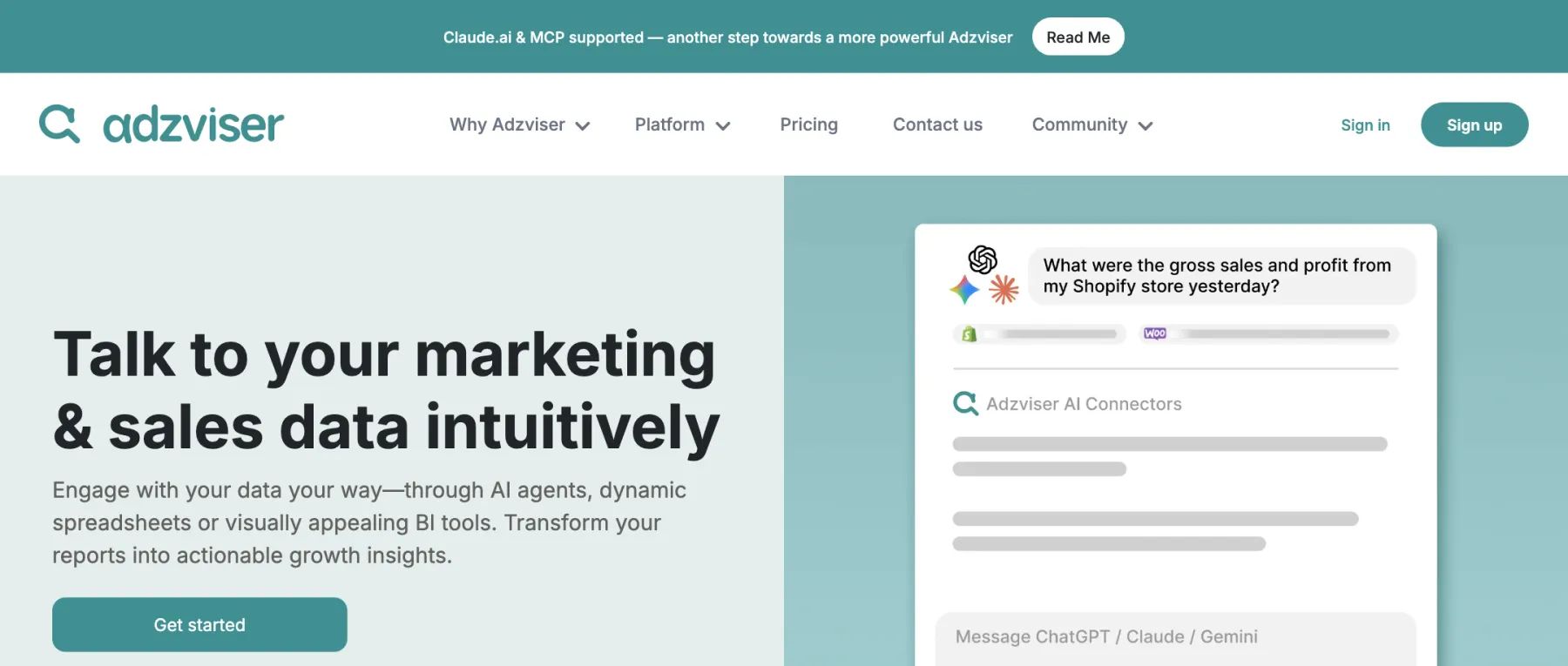
Adzviser pipes reporting from 40+ sources into AI clients, read-only.
- Features2/30
- Setup4/25
- Safety10/20
- Trust2/15
- Price0/10
Adzviser moves reporting from 40+ marketing sources into 12 destinations, including ChatGPT, Claude, Sheets, and Power BI. For Google Ads that means summaries, budget pacing, and spend snapshots, which suits weekly check-ins.
It is read-only end to end, users report occasional data inaccuracies worth checking against the native dashboard, and at $48.99 to $148.99 a month you are paying management-tool money for a data pipe.
Pros
- ✓40+ data sources into 12 destinations, ChatGPT, Claude, Sheets, and more
- ✓Bootstrapped and self-funded, US-hosted
Cons
- –Read-only, no write or mutation capability anywhere
- –Users report occasional data inaccuracies, verify against the dashboard
Hosting
Hosted
Safety
Read-only, cannot spend
Trust
Bootstrapped (2022)
Price
$48.99-$148.99 mo
Flyweel
Read-only + attribution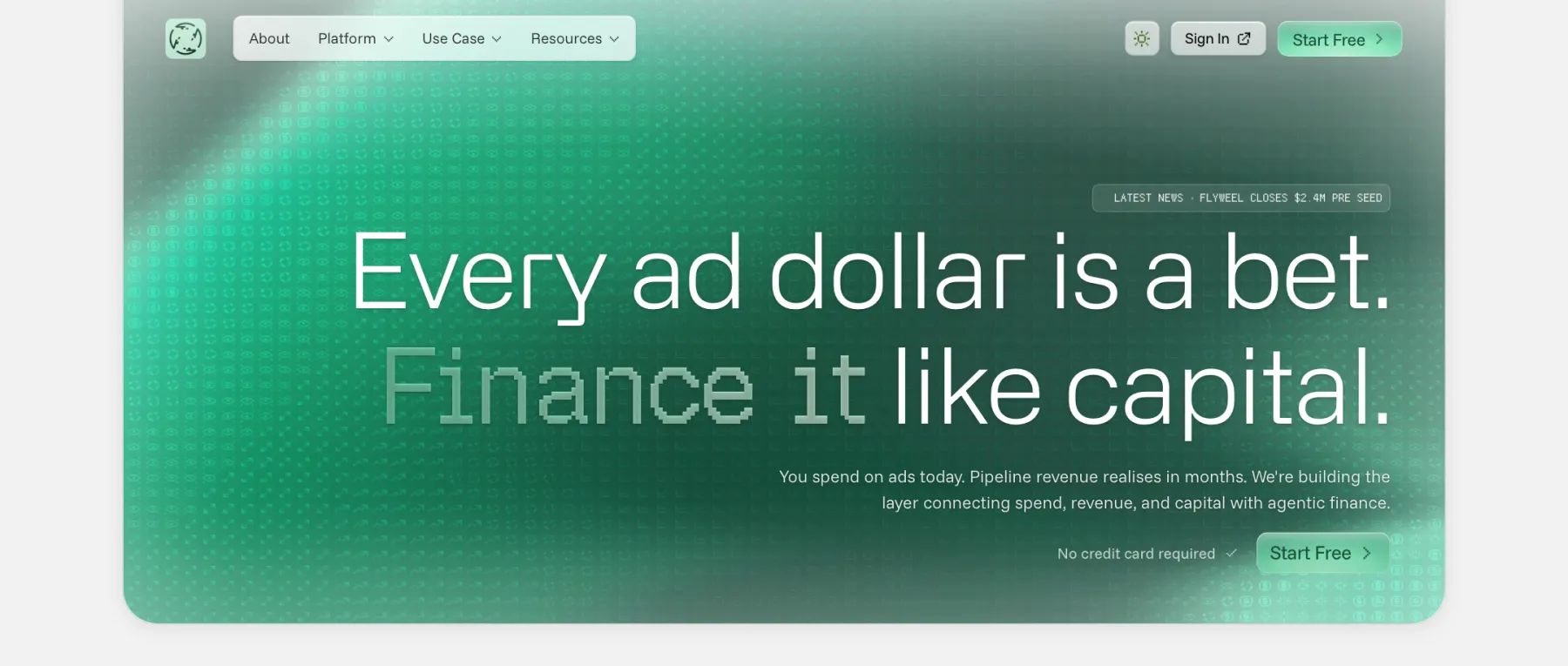
Flyweel normalizes 222 metrics across platforms. Its AI is read-only by design.
- Features2/30
- Setup3/25
- Safety10/20
- Trust1/15
- Price1/10
Flyweel answers the write question in its own FAQ: can the AI make changes to campaigns? "No. AI is read-only." What it does instead is normalize 222 metrics across Google, Meta, and TikTok so cross-platform questions come back in one shape, no GAQL required.
The constraints are caps and lag: 30 metrics per query, 500 rows, data one to six hours behind. Pricing is flat, a free tier and a $149 a month Scale plan. Decent reporting; as a Google Ads MCP it manages nothing, which is why it closes the list.
Pros
- ✓222 normalized metrics across Google, Meta, and TikTok
- ✓Flat pricing, no percentage of ad spend, free tier included
Cons
- –Read-only by design, "you make changes in platforms"
- –Query caps (30 metrics, 500 rows) and 1-6 hour data lag
Hosting
Hosted
Safety
Read-only, cannot spend
Trust
Antler-backed (2025)
Price
Free, then $149 mo
Side-by-side comparison
| Tool | Score | Hosting | Features | Safety | Trust | Price |
|---|---|---|---|---|---|---|
AdKit#1 | 94 / 100 | Fully hosted, ~3 clicks | 7 platforms; full write; ad library, AI creatives, strategy | Draft-first approval | Accountable company, official API | Flat $29 / $49 mo |
Synter | 64 / 100 | Hosted + CLI | 27 platforms; full write; AI creatives | Approval + spend limits | VC-backed, 2026 launch | $20-$500 mo + 3% of spend |
Adspirer | 61 / 100 | Hosted (OAuth 2.1) | 6 platforms; write incl. PMax; no keyword/extension tools documented | Paused-default + confirm | Founder-run, bootstrapped | Free, then $40-$167 mo |
Pipeboard | 59 / 100 | Hosted, per-platform URLs | Google + 6 others; full write; 35+ raw tools | Paused-default creation | Bootstrapped, OSS roots | Free; $29.90 for 3 accounts, $199 for 25 |
Google Official MCP | 58 / 100 | Self-hosted, dev token + GCP | Google only; read-only; 3 tools, raw GAQL | Read-only, cannot spend | First-party (Google) | Free |
Blend MCP | 52 / 100 | Hosted | 8 platforms; full write; ecommerce tilt | Live execution, no draft | Founded 2020, $3.6M | $29-$199 mo |
GoMarble | 48 / 100 | Hosted + OSS local | Meta, Google, GA; gated write on top tier | Approval gates (Operator) | Real company, active OSS | $97-$297 mo, annual |
Ryze AI | 46 / 100 | Hosted | Google, Meta; write; autonomous optimization | Dry-run + change limits | Customer proof unverified | ~$43-$89 mo + credits |
Windsor.ai | 42 / 100 | Hosted SaaS | 325+ sources; reporting + basic writes | No approval step | SOC 2, est. 2017 | Free, then $23-$598 mo |
Composio | 38 / 100 | Hosted, BYO OAuth | Google among 250+ toolkits; batch mutations | No draft or review | Established dev platform | Free, then $29/mo + usage |
Zapier MCP | 34 / 100 | Hosted | Lists, statuses, reports; no campaign creation | No approval step | Established (Zapier) | Free, then $19.99+ mo |
google-ads-copilot | 32 / 100 | Self-hosted | Reads via official server; staged basic writes | Explicit confirmation | Public alpha, one maintainer | Free (MIT) |
cohnen/mcp-google-ads | 30 / 100 | Self-hosted (Python) | Google only; read-only reporting | Read-only, cannot spend | Unmaintained since Oct 2025 | Free (MIT) |
mathiaschu/google-ads-analyzer | 26 / 100 | Self-hosted (Python) | Google only; basic writes | No approval gate | Hobby repo, inactive | Free (MIT) |
Funnel.io | 21 / 100 | Hosted SaaS | Google as 1 of 600+ sources; read-only | Read-only, cannot spend | Established enterprise vendor | Custom, by quote |
Triple Whale | 19 / 100 | Hosted (API key) | Blended ecom metrics; read-only | Read-only, cannot spend | Established ecom vendor | Paid Triple Whale plan |
Adzviser | 18 / 100 | Hosted | 40+ sources; read-only reporting | Read-only, cannot spend | Bootstrapped (2022) | $48.99-$148.99 mo |
Flyweel | 17 / 100 | Hosted | Google, Meta, TikTok; read-only; 222 metrics | Read-only, cannot spend | Antler-backed (2025) | Free, then $149 mo |
How to choose a Google Ads MCP
Start with the write question, then match the tool to what you actually need:
- You want an agent that runs your ads safely. Pick AdKit. Full write access, a draft-first approval step, a complete toolkit (ad library, AI creatives, strategy), and seven ad platforms from one connection.
- You only need to query your data, free and first-party. Google's official MCP is trustworthy and deep, as long as you accept read-only access and a developer-grade setup.
- You are a developer who wants raw write access. Pipeboard wraps the management lifecycle in 35+ tools with paused-default creation. Full control, no extras, and priced per ad account.
- You run a very long platform list. Synter covers 27 platforms with approval gates, if the 3%-of-spend and per-action fees work at your budget.
- You want continuous optimization of existing campaigns. Ryze pairs its MCP with an autonomous engine, within guardrails you set. Read the trust note on its card first: we could not verify its homepage testimonials.
- You only need reporting. Reporting-first tools like Windsor.ai, Funnel.io, or Flyweel pull Google Ads data into your AI client. None of them can create campaigns, and only Windsor can so much as pause one.
For most people running real money, the deciding factors are write access, safety, and what the tool does beyond the raw API. That is why AdKit leads: it is in the small group that can manage campaigns, one of the few where every change waits for your approval, and the only one that ships a competitive ad library and creative tools in the same connection, at a flat $49 for unlimited brands.
Connect AdKit to Google Ads in 3 steps
- Sign up and start your project. Create an AdKit account and open a project for your brand. No developer token or Google Cloud setup.
- Connect your Google Ads account. Authorize through Google's official OAuth flow. AdKit talks to the official Google Ads API on your behalf.
- Point your agent at AdKit. Add AdKit to Claude, ChatGPT, Cursor, or any MCP client, then ask it to audit a campaign or draft a new one. Every change waits for your approval before it goes live.
Full walkthrough: How to set up the Google Ads MCP. Running Meta too? See the best MCP servers for Meta Ads.
Frequently asked questions
AdKit is the best Google Ads MCP for most people. It is one of the few servers with full write access to Google Ads, and the safest of them, since every change is saved as a draft you approve before it goes live. On top of campaign management it gives your agent a competitive ad library, AI creatives, and a strategy skill, and it runs seven ad platforms from one connection (Google, Meta, TikTok, Reddit, X, LinkedIn, and Microsoft). Setup is hosted and takes about three clicks, with no developer token or code.
Yes. Google open-sourced an official Google Ads MCP server in October 2025. It is well maintained and free, but strictly read-only: Google's own docs state it cannot modify bids, pause campaigns, or create new assets. It is also developer-grade to set up, requiring a Google Ads developer token, a Google Cloud project, and OAuth credentials.
It depends on the server, and on Google Ads the split is unusually sharp. Google's official MCP and most open-source servers are read-only. Write-capable options include AdKit, Adspirer, Pipeboard, and Synter, which can create campaigns, edit budgets, and launch ads. A third group, analytics tools like Funnel.io or Adzviser, only pull reports. Check write access first, because a read-only server cannot run your ads for you.
It is safe when the server puts a human approval step between the agent and your live account. AdKit saves every change as a draft and waits for your yes before anything goes live. Some others create campaigns paused by default or gate writes behind a confirmation. Servers without any gate can spend real budget the moment the agent acts, so prefer one with a draft or approval layer.
Only for the self-hosted open-source servers. Google's official MCP and community servers like cohnen/mcp-google-ads require your own developer token, a Google Cloud project, and OAuth setup. Hosted servers like AdKit, Adspirer, and Pipeboard handle the API side for you: you sign in with your Google account and connect your MCP client to a URL.
Google's official server is free and open source, but read-only and self-hosted. Several hosted tools have free tiers, including Pipeboard, Adspirer, and Windsor.ai, usually capped by tasks or accounts. For unlimited hands-on management at a flat price, AdKit starts at $29 a month for one brand and $49 for unlimited brands, with every tool and MCP access included.
Take each homepage testimonial and search the platform whose logo it shows for the reviewer and the quote, then search the named person and company. Real proof resolves in a minute. A logo with no link, a handle that returns 404, or a reviewer missing from that platform means unverified. Every vendor in this roundup passed except Ryze AI; the details are on its card.
Technically its MCP does what it claims: write access to Google Ads with guardrails. Its customer proof does not hold up. As of 6 September 2026, none of the six homepage testimonials could be verified, including an X account that does not exist and a Trustpilot reviewer who is not on Trustpilot. We rank it 8th of 18 and treat its claims as unverified.